
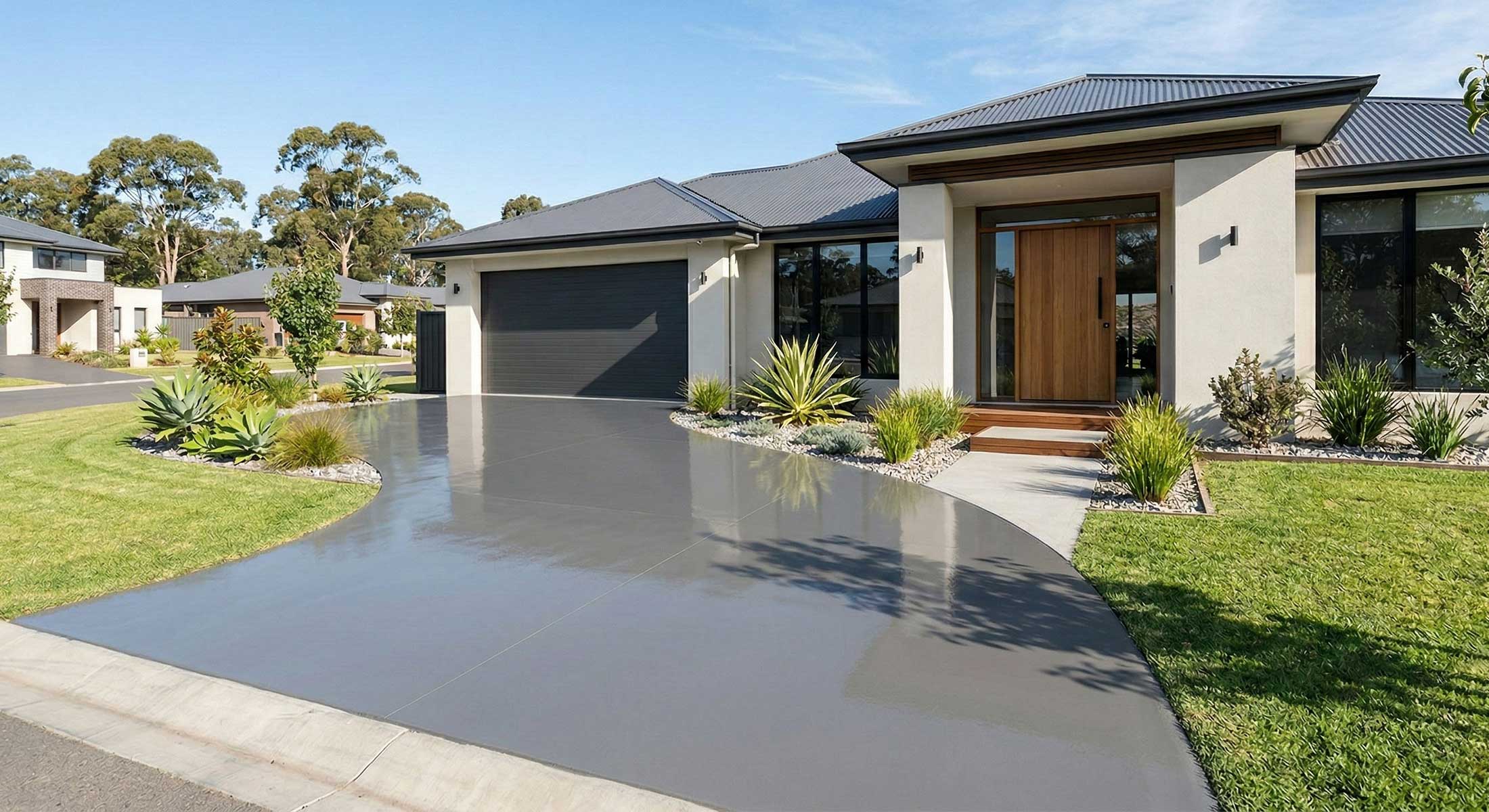
Choosing Your Sealer Colour
Tips for Selecting the Perfect Shade with Coloured Concrete Sealer 301.
Picking a sealer colour for your concrete sounds simple… until you realise it’s not just a “colour” decision. Get it right and your driveway or patio looks fresh, modern, and pulled together. Get it wrong and it can clash with your home, look too dark in shade, or feel “off” every time you pull in the car.
Coloured Concrete Sealer 301 is designed to make colour choice easier because it’s pre-tinted — no mixing pigments, no guessing ratios, and no hoping the tint comes out the same from one coat to the next. You choose your colour, apply your coats, and you get a consistent wet-look, high gloss finish that also seals and protects the surface.
Here’s how to choose your colour with confidence.
Start with what your home already “says”
Before you look at colour charts, take a quick step back and read the space. What are the dominant colours you can’t change easily? Think roof colour, bricks or render, fascia, fencing, outdoor tiles, stonework, and even the colour of your garage door.
Concrete sits underneath everything visually, so the best colour usually supports those existing tones rather than fighting them. If your exterior leans warm (beige brick, cream trim, sandstone), warmer sealers tend to look more natural. If your home is cooler (charcoal roof, grey render, black window frames), cooler greys often feel cleaner and more “designed”.
Natural light changes everything
The same colour can look totally different depending on the light it gets.
A driveway in full sun will read lighter and brighter across the day. A side path that’s shaded most of the time can make colours look deeper, cooler, and sometimes darker than you expected. If you’ve got trees, tall fences, or a two-storey wall casting shadow, factor that in early.
If you’re unsure, a simple rule helps: in heavily shaded areas, going a touch lighter usually keeps the space feeling open rather than gloomy.
Think mood — not just colour
Colour is emotional, even on concrete.
Lighter neutrals tend to feel clean and spacious, and they can make smaller outdoor areas feel bigger. Mid-tone greys and earthy tones often feel modern and practical — a good “hides real life” option for busy households. Dark charcoals can look premium and sharp, but they can also make stains, dust and leaf litter more noticeable depending on your surroundings.
Ask yourself how you want the area to feel when it’s finished — calm, coastal, modern, classic, bold — then choose the colour that naturally fits that vibe.
Surrounding colours can “tint” your concrete
This part surprises people. Your concrete doesn’t exist in isolation — it reflects and picks up colour from what’s around it.
Green lawns and gardens can make warm tones look warmer and cool tones look slightly muted. Red brick walls can add a warm cast to nearby surfaces. Blue pools can cool down greys and make beige tones feel more yellow than expected. Even outdoor lighting at night can shift how the colour reads.
That’s why choosing a colour on a screen alone can be risky. Which leads to the best tip of all…
Always test a sample in your actual space
If you want to feel confident, test first. A sample lets you see the colour where it will live — in your light, next to your house, with your landscaping.
Choose one or two colours you like, then test them in a few spots. Do one patch in full sun, one in shade, and one near any strong surrounding colour (like brick, garden beds, or fencing). Look at it in the morning, midday, late afternoon, and at night under outdoor lights. Give it at least 24 hours before deciding — first impressions can shift once it fully settles.
Also, aim to test on the same concrete surface you’re sealing. Existing concrete colour, porosity, and previous coatings can all influence the final look.
Match colour choice to how the area is used
A front driveway gets tyre marks, traffic film, dust, and regular wear. Side access paths can get more shade and organic staining. Patios often show furniture marks and BBQ splashes.
If the area is high-use, think practically as well as aesthetically. Mid-tone colours are often the sweet spot because they’re forgiving without feeling too dark.
Don’t forget finish and safety
Coloured Concrete Sealer 301 dries to a high gloss wet-look finish, which is a big part of that “new concrete” transformation. In wet areas or on sloping driveways, adding an anti-slip powder to the final coat can help provide extra grip while still keeping the finish looking great.
A quick note about screens and colour charts
Colour charts are a helpful starting point, but computer and device screens vary a lot — phone brightness, monitor settings, and even the time of day you’re viewing can change what you see. Use the chart to narrow your options, then lock it in with a sample test on-site.
