
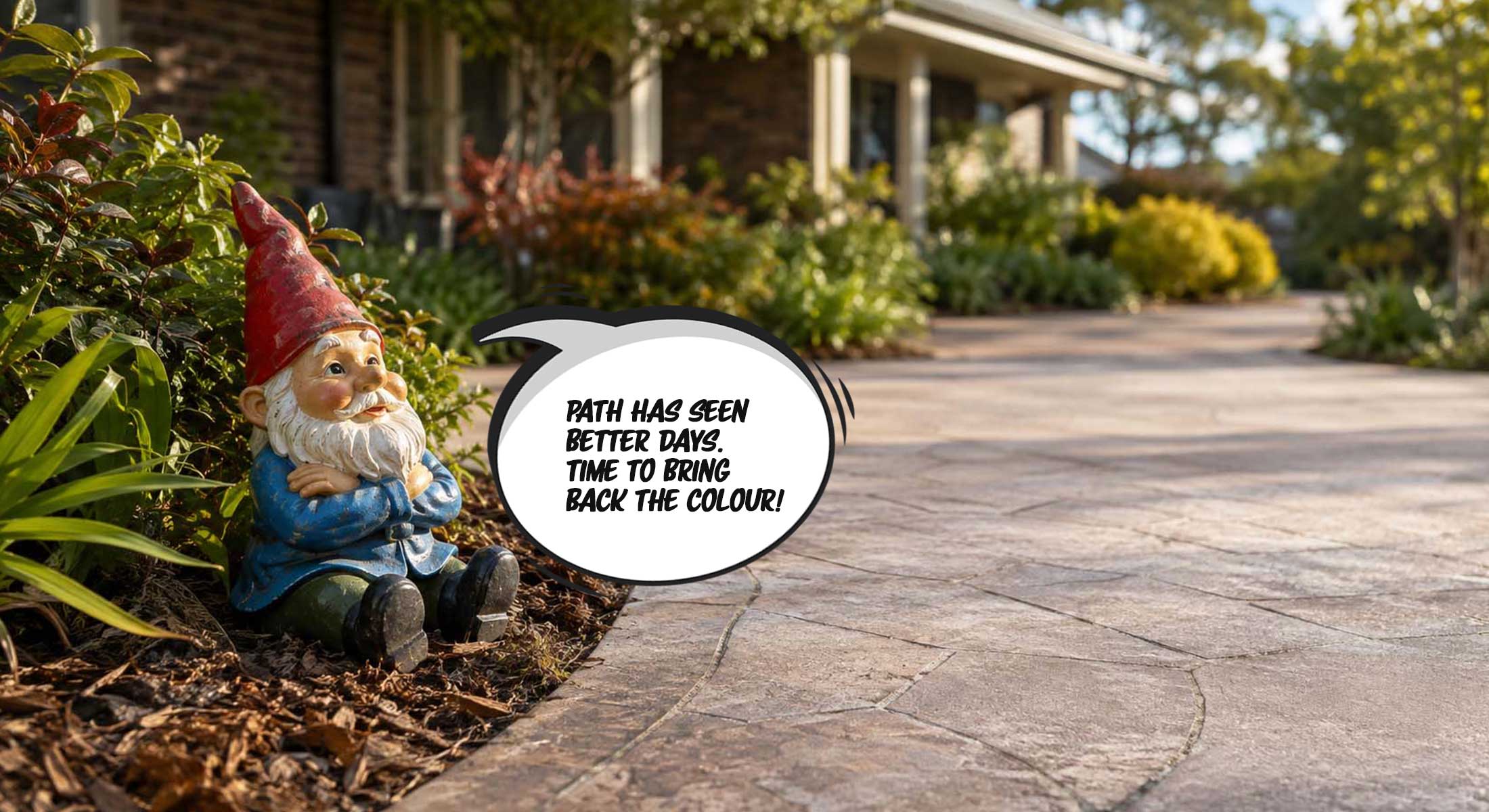
Best Time of Year to Seal Concrete
And Why Spring Is a Sweet Spot.
If you’ve ever stood in your driveway holding a tin of sealer, squinting at the sky and wondering whether today is actually a good day to get started, you’re not alone. Timing matters more than most people realise when it comes to sealing concrete, and getting it wrong can mean a patchy finish, a sealer that won’t cure properly, or a weekend of hard work that just doesn’t hold up the way it should.
The good news is that you don’t need to overthink this. Once you understand what your sealer actually needs to do its job properly, picking the right time of year becomes pretty straightforward. So let’s walk through what’s really going on, season by season, and where spring fits into the picture.
Why Timing Actually Matters for Sealing Concrete
Concrete sealers are designed to cure under fairly specific conditions. Most products, whether water based or solvent based, need a certain temperature range to flash off correctly, bond to the surface, and build the protective film or penetrate into the concrete the way they’re meant to. Get the temperature too low and the sealer can take forever to cure, stay tacky, or fail to bond properly. Get it too hot and things can go the other way, with the sealer drying so fast it doesn’t have time to level out, leading to lap marks, bubbling, or an uneven finish.
Humidity plays a role too. Too much moisture in the air, or moisture sitting in the concrete itself, can trap vapour under the sealer and cause whitening, blushing, or a cloudy finish. And then there’s rain. Fresh sealer needs time to cure before it can handle water, so a surprise shower a few hours after application can undo an entire day’s work.
Put simply, the ideal sealing conditions are mild and dry. No extreme heat, no cold snaps, low humidity, and no rain forecast for at least 24 to 48 hours. In Australia, that combination doesn’t show up in every season, in every region, which is exactly why the time of year you choose matters.
Spring: Often the Sweet Spot
For much of Australia, spring hits that sweet spot better than any other season. Days are getting longer and warmer, but you’re not yet dealing with the extreme heat that turns a concrete driveway into a frying pan by 10am. Humidity is generally lower than the wet, sticky months of summer, and rain patterns tend to be a bit more settled than the unpredictable storms that can roll through as the weather warms up further.
There’s also a practical bonus to sealing in spring. It gets the job done and fully cured before the harshest UV exposure and heat of summer arrive, which is exactly when your driveway, patio or pool surround needs that protection the most. Sealing in spring means your concrete goes into the toughest part of the year already looking its best and already protected, rather than playing catch up in January.
That said, spring in Australia is a big, varied season depending on where you are. A mild, dry spring morning in Melbourne looks very different to a warm, increasingly humid spring day in Brisbane. So it’s still worth checking your local forecast rather than just going by the calendar. Aim for a stretch of at least a couple of days with mild temperatures, low humidity and no rain in sight, and you’re in good shape.
What About Summer, Autumn and Winter?
Summer can work, but it comes with challenges. In many parts of the country, especially inland and in the north, daytime temperatures and direct sun on the concrete surface can push things into territory where solvent based sealers flash off too quickly, making it hard to keep a wet edge and avoid lap marks. If you are sealing in summer, early morning or late afternoon application, working in shaded areas first, and avoiding the very peak of the heat all help.
Autumn is a genuinely solid alternative to spring in a lot of regions, particularly in the cooler southern states where autumn tends to be mild and relatively dry before winter sets in. If spring gets away from you, autumn is a good fallback rather than pushing through summer heat or winter cold.
Winter is generally the trickiest season, especially in the southern states and Tasmania. Lower temperatures slow curing right down, and winter also tends to bring more rain and higher humidity in many regions, which is a tough combination for getting a clean, durable result. In the warmer northern parts of Australia, like Queensland’s dry season, winter can actually be quite workable, so this one really does come down to where you live.
Choosing the Right Sealer for Your Driveway
Once you’ve got your timing sorted, the next piece of the puzzle is picking a sealer suited to your driveway and the finish you’re after.
If you’ve got a plain broom finished concrete driveway and want strong protection without changing the colour much, Concrete Sealer 310 is a solid, versatile option that works well across a range of surfaces. For driveways specifically, where you’re dealing with vehicle traffic, oil drips, tyre marks and everyday wear, Driveway Sealer 311 is purpose built to handle that kind of punishment while still giving the surface a durable, protective finish.
If your driveway has some colour in it, or you want to enhance and enrich the existing tone of the concrete, Coloured Concrete Sealer 301 is worth a look, giving you protection along with a boost to colour and depth. For a completely different approach that leaves the natural look and feel of the concrete untouched, Penetrating Water Based Sealer 602 soaks into the surface rather than forming a film on top, which suits homeowners who want protection without any change in appearance or slip characteristics.
And if you’re after a more traditional, higher build finish and don’t mind working with solvent based products, Sealer Solvent 399 is built for exactly that kind of application, giving a tougher film that stands up well to heavier use.
Whichever product you land on, the process is the same. Check the weather, aim for those mild, dry conditions, prepare your surface properly, and apply according to the product instructions. Get that combination right and your driveway will be sitting pretty, and properly protected, well before the harsh Australian summer sun has a chance to test it.
The Bottom Line
There’s no single day marked on the calendar that’s perfect for every driveway in every part of Australia, but as a general rule, spring gives you one of the best windows of the year to get sealing done, with autumn as a strong backup in cooler regions. Keep an eye on the forecast, choose a sealer that matches your surface and the look you’re after, and you’ll set your concrete up to handle whatever the seasons throw at it next.
If you’re not sure which sealer is right for your driveway, get in touch with the team at Base Coatings. As an Australian manufacturer selling factory-direct, we can help you pick the right product for your project without the middleman markup.
